-2.png?width=209&height=122&name=Classic+Logo+(1)-2.png)
There’s an old saying among Sierra skiers: You marry your boots, you rent your skis.
When starting out, it’s easy to get distracted by glossy graphics on new skis, but ask any local on the Mammoth Mountain lift line and they’ll tell you the truth: your ski boots are the single most important piece of gear you will ever buy. They translate every shift in weight directly into a clean turn.
If your boots hurt, your day is over before lunch. If they are too big, you lose control. To help you make the right choice, here is our boot-fitting team’s guide to buying your first pair.
1. Ditch the "Shoe Size" Mindset
The biggest mistake first-time buyers make is choosing a ski boot in their regular sneaker size. Ski boots are measured in Mondo Point (the length of your foot in centimeters).
Unlike streetwear, a brand-new ski boot should feel remarkably snug, like a firm handshake across your entire foot. Your toes should lightly touch the end when standing upright, then slide back slightly as you flex your knees forward into a skiing stance.
- Pro Tip: Ski boot liners compress (or "pack out") by roughly half a size after 5 to 10 days on the snow. If a boot feels like a comfy bedroom slipper in the shop, it will likely be far too loose halfway through your season.
2. Understand Boot Flex & Last Width
Boots aren't one-size-fits-all, and two key numbers dictate how a boot performs:
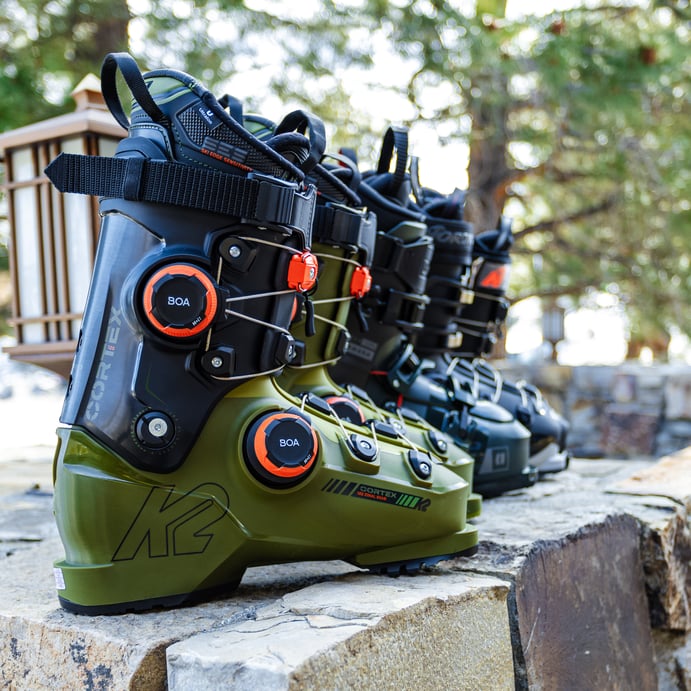
- Flex Rating: This refers to how hard it is to bend the boot forward. Beginner skiers generally want a soft to medium flex (70–90 for men, 60–80 for women). This allows you to bend your knees easily and maintain proper posture without fighting the plastic.
- Last Width: This measures the widest part of your forefoot in millimeters. Narrow last widths are 97–98mm, average widths run around 100mm, and wide-fit measurement range around 102mm+.
3. Don't Skip Custom Footbeds & Upgraded Liners
Factory insoles that come in ski boots are paper-thin pieces of foam with zero arch support. When you flex forward while skiing, an unsupported arch flattens out, forcing your foot to lengthen and press against the boot shell. Adding custom orthotics holds your arch in a neutral position, eliminating foot cramping and improving edge control.
If you want the ultimate upgrade, consider a high-performance liner. We specialize in ZipFit custom liners. Packed with proprietary OMFit cork composite, ZipFits conform dynamically to your foot shape to lock down your heel, eliminate foot pain, and provide an infinitely remoldable fit season after season.
Test Before You Buy: The Perfect Fit Demo Program
Unsure which model or fit works for your foot shape? You don't have to guess. Through our Perfect Fit Plus Program, you can demo any of our 90+ adult boot models equipped with a custom-molded ZipFit liner right on Mammoth Mountain before making a purchase.
If you decide to purchase your gear, we credit your demo fees directly toward your new setup!
Rooted in Ski Boot History: Why Boot Fitting Matters
Buying ski boots off a shelf or online without a proper fit is a gamble that rarely pays off. At Footloose Sports, boot fitting isn't just a service, it's in our DNA.
Our shop was co-founded in 1979 by legendary ski boot pioneer Sven Coomer, the mastermind who helped design modern plastic ski boots and later founded ZipFit. Today, our master boot fitters carry on that legacy, utilizing custom shell punching, grinding, and liner molding to resolve pressure points and accommodate any foot shape.
Ready to Find Your Perfect Fit?
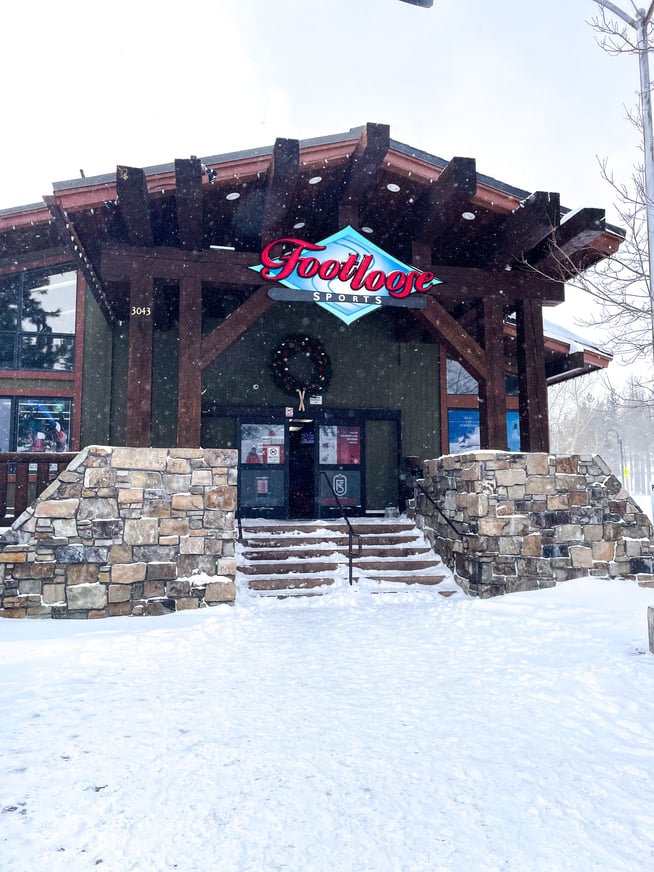
If you're gearing up for a trip to Mammoth Mountain, stop by Footloose Sports when you arrive in town. We are conveniently located in the heart of Mammoth Lakes and can help you find the right ski boots for a comfortable, confident day on the mountain.
Walk-ins are always welcome for custom fitting, liner installations, and demo consultations.